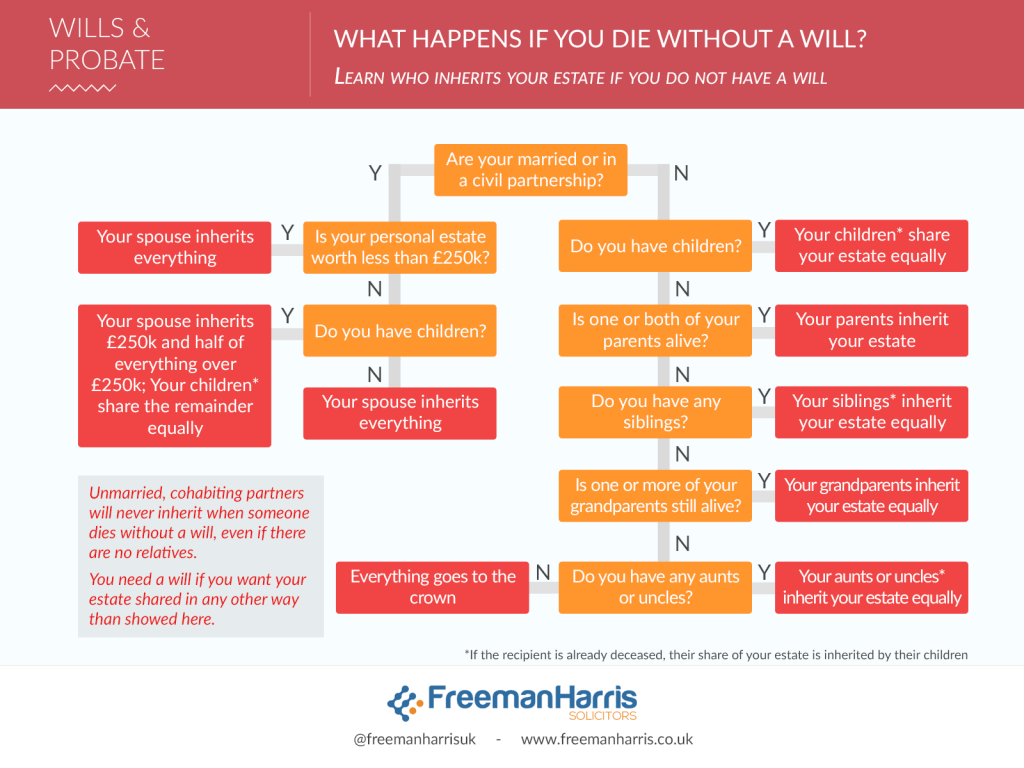
What happens if you die without a will?
19th November 2015
When someone dies without a will it is called dying “intestate.” When this happens, the deceased’s assets are shared out…
Quick answer: Probate in England and Wales typically takes between 6 and 12 months for a straightforward estate, though many take longer. The main stages are applying for the grant, collecting assets, paying debts and tax, and distributing the estate to beneficiaries.
If you are asking how long does probate take in the UK, the honest answer is that it varies. A simple estate with no disputes, no Inheritance Tax, and straightforward assets might move through in around 6 months. Larger or more complex estates regularly take a year or more. Some disputes can extend that considerably.
This guide explains the main stages, typical timescales, what causes delays, and when to consider instructing a probate solicitor.
Before assets can be collected or distributed, someone with legal authority to deal with the estate must usually be confirmed. This is called a grant of probate if there is a will, or letters of administration if there is no valid will or if the executor is not able or willing to act.
Applying for the grant involves gathering information about the estate’s assets and liabilities, completing probate forms, paying the probate registry fee (for estates above the threshold), and in some cases dealing with Inheritance Tax first.
The Probate Registry currently takes several weeks to process applications in many cases, though processing times can change and have been subject to backlogs in recent years.
Once the grant is issued, executors or administrators can contact banks, pension providers, investment platforms, insurers, and others to collect in the assets. For straightforward bank accounts, this may take a few weeks. For investments, property, or complex assets, it can take considerably longer.
Before distributing anything to beneficiaries, all debts and liabilities must usually be paid. These may include the deceased’s outstanding bills, mortgages or loans, Inheritance Tax, Income Tax, Capital Gains Tax, and administration costs. If Inheritance Tax is due, it must usually be paid before the grant is issued, which can create cash flow challenges. Dealing with HMRC on estate tax matters can take time, especially where valuations are disputed or where the estate includes business or agricultural assets.
Once debts and taxes are settled, assets can be distributed to beneficiaries in accordance with the will or intestacy rules. This stage often includes property transfers, share sales or transfers, cash distributions, and dealing with any legacies or trusts set up under the will.
If the estate is taxable, delays dealing with HMRC valuations and tax calculations can add months to the process. Estates with business property relief, agricultural property relief, or complex valuations typically take longer.
If the estate includes property that needs to be sold or transferred, timescales will depend on the property market, conveyancing, and any mortgage or co-ownership issues.
If it is not clear who all the beneficiaries are, or if some assets are difficult to locate, additional investigations may be needed.
If the will is contested, if beneficiaries dispute valuations, or if the executor’s conduct is challenged, timescales can increase dramatically. Contentious probate proceedings can take years in serious cases.
Overseas assets, interests in businesses, pension benefits, jointly held property, and unusual investments all add layers of complexity and time.
The Probate Registry has experienced backlogs. Even straightforward applications have sometimes taken longer than expected to process.
Executors who are also grieving relatives may find the process difficult to manage. Delays in gathering information, filing forms, or chasing financial institutions can add weeks or months.
Not always. Some assets pass automatically on death without probate. These may include jointly owned property held as joint tenants, assets in trust, and some life insurance policies or pension death benefits paid directly to a named beneficiary. However, most estates with significant assets held in the deceased’s sole name will require some form of grant before those assets can be released.
If there is no valid will, the estate passes under the intestacy rules set out in the Administration of Estates Act 1925. An administrator is appointed rather than an executor. The process is broadly similar, but who inherits is determined by the rules, not by the deceased’s wishes. Unmarried partners, stepchildren, and others not listed in the rules may not inherit at all under intestacy.
Professional advice from a wills and probate solicitor is often worthwhile where the estate is large, Inheritance Tax may be due, there are multiple properties or overseas assets, the executor lacks time or confidence to manage the process, beneficiaries or family members are in dispute, or there are business interests or trusts to consider.
A very simple estate with no tax, no property, and no disputes might complete in 3 to 6 months. Most estates take longer.
Selling or transferring property can add several months to the overall timeline, depending on the property market and any legal complications.
Not always. Well-organised estates with all relevant information to hand, no tax issues, and no disputes can move more quickly.
Executors have a duty to administer the estate within a reasonable time. The law recognises an executor’s year as a general guide, though this is not absolute. Legal advice may be appropriate if there is serious and unexplained delay.
This article is for general information only and is not a substitute for legal advice.